If you have been watching West Michigan real estate, you may have noticed that Grand Rapids keeps showing up in more home searches and moving conversations. That interest is not random. Buyers are paying attention because Grand Rapids offers a mix of job access, everyday convenience, cultural energy, and housing variety, even as inventory stays tight. If you are trying to understand why demand remains strong here, this guide breaks down what is pulling buyers in right now. Let’s dive in.
Grand Rapids offers real economic traction
One reason buyers keep looking at Grand Rapids is simple: it feels like a place with momentum. The city’s 2025 population estimate reached 201,183, and city planning reports that both population and household growth have been positive since 2010.
That growth is supported by a broad employment base. Grand Rapids is anchored by health care, manufacturing, retail, education, and related services, and about 104,000 non-resident commuters work in the city. For buyers, that points to a market with real daily activity and a larger labor pool than the city limits alone might suggest.
The local workforce data also helps explain the appeal. Median household income was $69,108 in 2025, 41.6% of adults held at least a bachelor’s degree, and 69.3% of adults were in the civilian labor force. Those numbers suggest a city with a sizable base of working households and steady demand drivers.
Visible investment adds confidence
Buyers are often drawn to places where investment is easy to see. In Grand Rapids, that signal is strong. The city reported $949.3 million in construction value in 2025, which was its highest total ever and the fifth straight year of growth.
That does not automatically mean every block is changing at once, but it does show that developers, businesses, and public stakeholders continue to invest in the area. For many buyers, that kind of activity supports confidence that Grand Rapids is not standing still.
The broader economic picture also looks active without clearly reading as overheated. The Grand Rapids Chamber’s 2026 forecast projects modest employment growth along with wage growth of 3.4% to 3.6%. That balance can matter if you want a market with opportunity and energy, but not one driven only by short-term spikes.
Housing choices appeal to different buyers
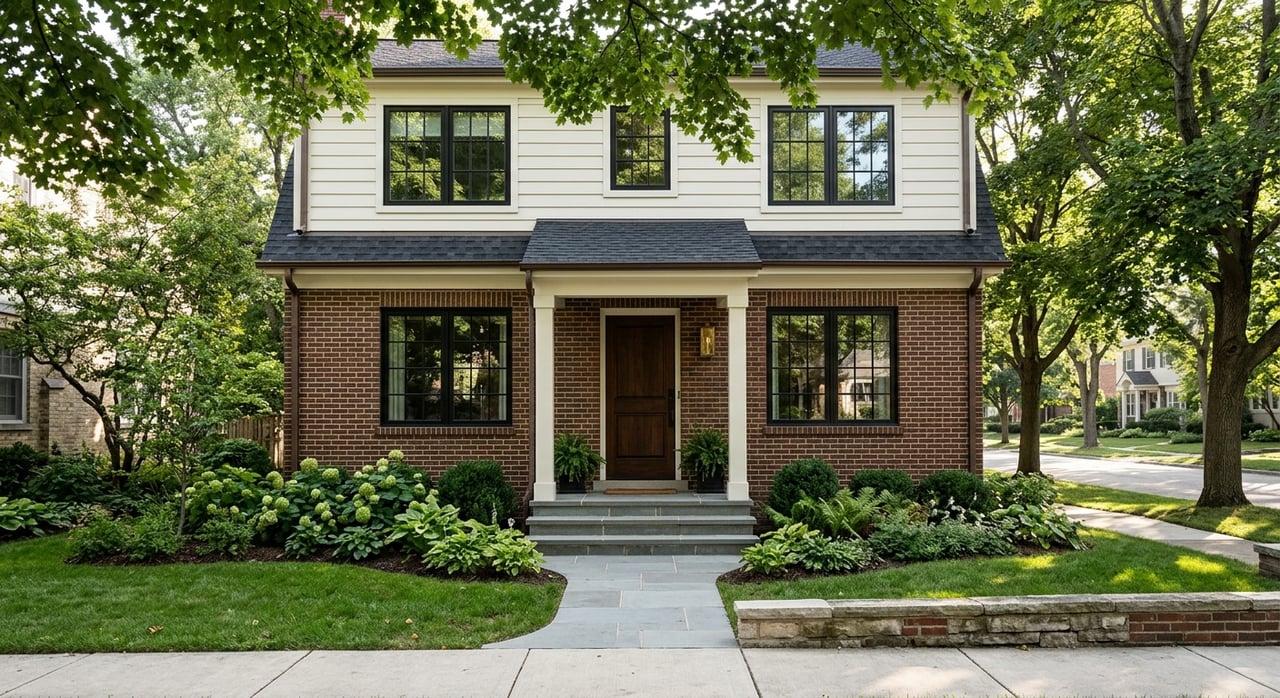
Another reason Grand Rapids keeps attracting attention is the range of housing types. Official city data shows that 56.6% of housing units are detached single-family homes, which gives many buyers the classic housing option they still want.
At the same time, the city includes a meaningful mix of other formats. About 15.6% of units are in 2-to-4-unit buildings, 8.1% are in 5-to-19-unit buildings, and 14.2% are in buildings with 20 or more units. That mix can appeal to buyers who are considering condos, attached housing, or lower-maintenance living.
The city’s housing plan also notes that Grand Rapids has an older housing stock than the broader state and region. For some buyers, that means a chance to find homes with character, established streetscapes, or renovation potential. For others, it means being thoughtful about condition, updates, and long-term maintenance when comparing options.
Tight supply keeps pressure on the market
Grand Rapids is attractive, but it is not an easy market for every buyer. Supply remains very limited. The city’s housing plan reports a homeowner vacancy rate of just 0.3% in 2025, which is an unusually tight level.
Homes also tend to move quickly. Median days from list to sale pending has often been around 10 to 14 days. That pace tells buyers they may need to be prepared to make decisions quickly when the right property comes on the market.
The pressure is not limited to ownership housing. Affordable housing occupancy is about 99%, and single-family plus duplex rentals are also at 99%. Local planning documents cite a rental housing gap of 6,990 units and a for-sale housing gap of 6,333 units, with the biggest shortages below 80% of Area Median Income.
Affordability is still a real challenge
For many buyers, Grand Rapids checks a lot of boxes, but affordability remains one of the biggest hurdles. Kent County’s 2026 to 2030 housing plan says that a typical home at the county’s median list price of $399,900 would require about $119,970 in annual income.
That gap helps explain why buyers are not just choosing homes based on style or location. They are also weighing monthly cost, renovation needs, commute tradeoffs, and whether attached or smaller housing types may make more sense.
Local governments are responding with tools meant to expand options. Plans and ordinances have supported accessory dwelling units, attached single-family options, density bonuses, and a Workforce Housing PILOT for units rented or sold to households earning up to 120% of area median income. For buyers, that signals a market trying to create more pathways into homeownership over time.
Lifestyle is a major part of the draw
Grand Rapids is not only attracting buyers because of economics. Lifestyle plays a big role too. The city offers a calendar of recurring events that gives the area a sense of energy throughout the year, including World of Winter, LaughFest, Cider Week GR, ArtPrize, and Christkindl Markt.
That kind of activity matters because buyers are often looking beyond the house itself. They want to know what daily life can feel like after closing. A city with regular public events, seasonal experiences, and shared gathering spaces can feel easier to plug into.
Grand Rapids also has established cultural destinations that add to its appeal. The Grand Rapids Public Museum includes expanded exhibits, the Chaffee Planetarium, more than 250,000 digital artifacts and specimens, and late-night programming. Frederik Meijer Gardens & Sculpture Park is a 158-acre art-and-nature destination that continues to stand out as a regional amenity.
The riverfront is becoming a bigger factor
The riverfront is another reason buyers are watching Grand Rapids closely. Downtown Grand Rapids Inc. says current riverfront work will create 4.5 acres of greenspace, a half-mile non-motorized trail system, water access, future public art opportunities, and a connection to Acrisure Amphitheater.
That matters because buyers are not only evaluating what exists today. They are also thinking about what the city is becoming. A river corridor that is actively being improved can shape how people use downtown and nearby areas for years to come.
This kind of public-space investment can be especially meaningful if you value walkability, outdoor access, or a stronger connection to the urban core. It adds another layer to Grand Rapids’ appeal that goes beyond square footage alone.
Transportation and access make daily life easier
Practical convenience is a major piece of the story. Grand Rapids works well as a regional hub, not just a standalone city. The Rapid serves Grand Rapids, East Grand Rapids, Grandville, Kentwood, Walker, and Wyoming through 28 fixed routes, bus rapid transit, and on-demand service across a 185-square-mile area.
Transit matters in everyday life, especially for households that want more than one commuting option. The system’s Silver Line was Michigan’s first bus rapid transit line, and The Rapid notes that 80% of riders use transit to get to and from work. Downtown, the free DASH shuttle adds another layer of convenience by running every 8 minutes.
Longer-distance access is also improving. Gerald R. Ford International Airport is in the middle of its ELEVATE program, a $600-plus million investment that includes 8 added gates in Concourse A and a relocated air traffic control tower to meet future demand. MDOT also notes that Amtrak’s Pere Marquette connects Grand Rapids and Chicago.
Short commutes support flexibility
One of the most practical selling points for buyers is how manageable daily travel can be. The city’s mean commute time is 19.0 minutes. That helps explain why many buyers see Grand Rapids as part of a wider housing map rather than a single-point search.
If you want different price points, housing types, or neighborhood settings, nearby communities can stay in play without cutting you off from the city’s jobs, events, and services. That flexibility is especially important in a market where low inventory may require you to widen your search.
Why buyers are acting now
When you put it all together, Grand Rapids makes a strong case. It has a broad economic base, visible public and private investment, cultural activity, evolving riverfront spaces, and practical regional access. Those factors create real reasons for buyers to keep this market on their shortlist.
At the same time, the market is not without friction. Tight supply and affordability pressure are very real, which means interest in Grand Rapids often comes with urgency. Buyers are drawn here by livability and opportunity, but they also know preparation matters.
If you are considering a move in Grand Rapids or anywhere across West Michigan, having clear guidance can make a fast-moving market feel much more manageable. The team at Jake Peterson Homes is here to help you understand your options, narrow your search, and move forward with confidence.
FAQs
Why are homebuyers interested in Grand Rapids right now?
- Buyers are drawn to Grand Rapids because of its broad job base, visible construction and public investment, cultural events, riverfront improvements, and practical regional access.
Is Grand Rapids housing inventory still tight for buyers?
- Yes. The city’s housing plan reports a 0.3% homeowner vacancy rate in 2025, and median days from list to sale pending has often been around 10 to 14 days.
What types of homes can buyers find in Grand Rapids?
- Grand Rapids has a mix of detached single-family homes, 2-to-4-unit properties, mid-size multifamily buildings, and larger multi-unit buildings, giving buyers several housing formats to consider.
Is Grand Rapids affordable for first-time homebuyers?
- Affordability can be challenging. Kent County’s housing plan says a typical home at the county median list price of $399,900 would require about $119,970 in annual income.
How does transportation affect buying in Grand Rapids?
- Transportation adds flexibility because The Rapid serves multiple nearby communities, downtown has the free DASH shuttle, the airport is expanding, and Amtrak connects Grand Rapids with Chicago.
Do buyers need to look beyond Grand Rapids city limits?
- In many cases, yes. With a mean commute time of 19.0 minutes, nearby communities may offer different price points or housing types while still keeping you connected to Grand Rapids.